

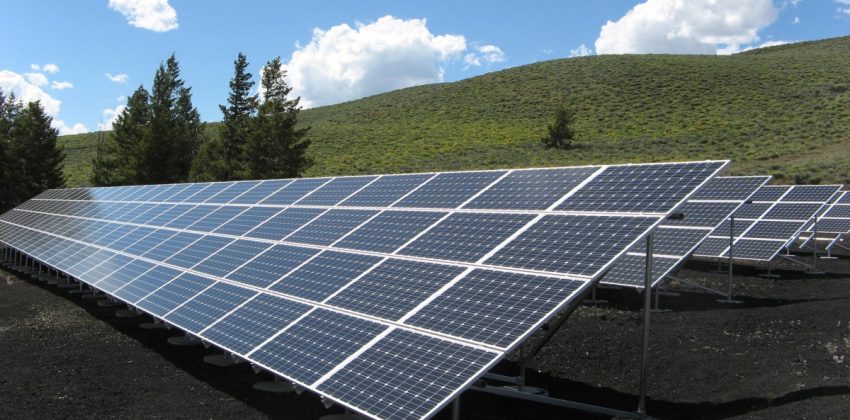
Malaysia’s path to net-zero by 2050 hinges on deploying solar and battery storage to rural areas, offering a faster alternative to costly grid expansion.
PETALING JAYA: Southeast Asia is feeling the squeeze of rising fuel costs and the urgent push to meet climate targets. In the current economic climate, clean energy is being pushed beyond city limits, into rural and underserved communities where reliable electricity remains a daily challenge.
For Malaysia, achieving its net-zero carbon target by 2050 would hinge not just on policy but also on how quickly practical, ground-level solutions could be deployed, said GoRental Global founder and managing director Colin Peh.
He highlighted Malaysia’s unique position to accelerate its clean energy transition, thanks to its strong solar potential and growing demand for energy resilience, particularly in Sabah, Sarawak and Orang Asli settlements across Peninsular Malaysia.
“Malaysia has abundant sunlight, which makes solar (energy) a natural advantage.
“However, the missing piece is storage. If we could make battery systems more accessible through financing models similar to car loans, then more households and communities could actually adopt clean energy,” he told theSun.
He added that while solar panels are increasingly affordable, battery storage systems remain a major barrier, often costing twice as much.
He expressed belief that collaboration between financial institutions, private companies and the government could close the gap.
He also said rural Malaysia represents the area where such solutions could make the biggest immediate impact.
Peh said extending the national grid to remote villages, especially in East Malaysia, is costly and logistically complex.
“In places such as Sabah and Sarawak, or even Orang Asli villages, building power lines doesn’t always make sense.
“But with modular solar and battery systems, you could bring power directly to communities without waiting for large-scale infrastructure.”
He cited GoRental’s recent work at Huay Nam Rin village in Chiang Mai, northern Thailand, as a model.
He said the availability of reliable electricity transformed everyday life, from lighting and cooling to cooking and sanitation.
“Once you have power, everything improves.”
“You could have clean water systems, proper lighting and children (are able to) study at night. These are simple things, but they matter.”
He added that such systems are not only environmentally sustainable but also economically viable, reducing reliance on diesel generators, which remain costly and polluting.
“In many rural areas, people still depend on diesel. It’s expensive, noisy and harmful to the environment. With solar and battery systems, you eliminate those issues while lowering long-term costs.”
Beyond rural communities, Peh sees opportunities in Malaysia’s commercial and industrial sectors.
He said for instance Johor is experiencing a boom in data centres, driving energy demand.
“Johor is seeing a surge in data centres, and energy resilience is becoming a major concern.
“You can’t rely solely on the grid. Storage solutions would be critical to support that growth.”
Founded in 2014 as a film equipment rental company, GoRental Global has evolved into a climate technology firm, specialising in portable power and microgrid systems.
Its work has supported major film productions, including Crazy Rich Asians, before expanding into broader energy solutions across Singapore and the region.
The company now positions itself as both a commercial energy provider and community-focused innovator, guided by its ‘power to empower’ philosophy, using energy access not just to supply electricity, but also to uplift communities.
“We started by solving a problem in film production – how to provide power without noise or pollution.
“But that same technology could be applied to homes, businesses and entire communities.”
Peh also called for stronger public-private partnerships to accelerate adoption.
“It shouldn’t fall entirely on the government.
“If companies invest, the government could match that. That’s how you scale impact faster.”
GoRental is also preparing to deepen its presence in Malaysia, with plans to launch an experience store to educate the public on renewable energy and microgrid technology, while exploring collaborations with local foundations to expand community initiatives.
For Peh, the message is clear – achieving net zero is not just about large-scale infrastructure, but also about ensuring solutions reach those who need them most.
“The technology is already here. Now it’s about how we apply it, whether in cities, industries or rural communities.
“If we do it right, Malaysia could move faster towards a more resilient and sustainable energy future.”
Source: malaysia-eyes-solar-and-battery-push-for-rural-power-and-net-zero-goal
Disclaimer
The views and opinions expressed in this article are solely those of the author and do not necessarily reflect the official stance of Kritik.com.my. As an open platform, we welcome diverse perspectives, but the accuracy and integrity of contributed content remain the responsibility of the individual writer. Readers are encouraged to critically evaluate the information presented.